

Why our new CTO left Microsoft after 19 years.
Rohit Tatachar spent nearly two decades at Microsoft Azure watching companies build AI they couldn’t deploy. Now he’s co-founder and CTO of GLACIS.
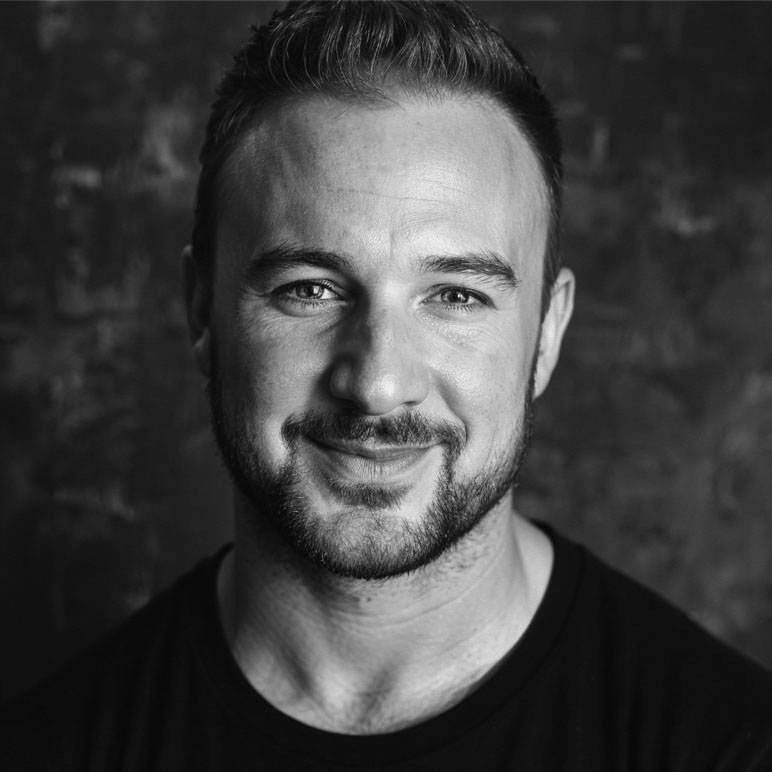
Today’s news is out — and I finally get to talk about something I’ve been sitting on for months. Rohit Tatachar has joined Glacis as co-founder and CTO.

Before there was a company to join
What the GeekWire article doesn’t fully capture is how far back this goes for us.
We first met back in 2017, at a Seahawks game — a friend invited us both and we ended up sitting a few seats apart. Years of family overlap in Seattle followed. Then last September 21st, at a mutual friend’s kid’s birthday party, I bumped into him again and — for the first time out loud — walked him through what I was thinking about starting. Something clicked. A couple of weeks later we sat down for brunch at Skillet and he grilled me on every detail. The architecture. The business model. The regulatory landscape. The honest gaps.
Rohit was guiding my thinking about Glacis before there was a company to join. Last fall, when I was still working through the earliest architecture decisions and go-to-market questions, he was the person I kept calling. Not as a favor — because he genuinely cared about the problem and had a clear-eyed view of what it would take to solve it.
He decided to come aboard over the holidays while visiting family back in India. He spent most of Q1 leaning in — evenings, weekends, architecture reviews — before starting full-time last month. From day one he brought a level of coherence and grounded expertise to what is, frankly, a very fast-moving and somewhat chaotic climate to be shipping product to AI teams.
What he saw from inside Azure
Rohit spent nearly 19 years at Microsoft across two stints, most recently as a principal product manager on the Azure AI Foundry team — their platform for building and deploying enterprise AI applications and agents. He had a front-row seat to an industry-wide pattern.
Companies could build AI. They could run proofs of concept. But when it came time to move into production — the moment a model touches real decisions, real patients, real money — they hit a wall. They couldn’t explain or verify what their systems were doing once they were live.
Same challenge I’d faced from the startup side with Yara. Same challenge Jennifer was seeing in her clinic, where ambient scribes were fabricating prescriptions in her clinical notes.
He didn’t just advise. He shaped how we think about what “runtime trust” actually means — not just detecting problems, but converging three dimensions into a single provable record:
Infrastructure baseline. What was the state of the environment when this AI decision was made? Configuration, model version, safety controls — the full context.
Model behavior. What did the model actually do? Not what it was supposed to do. What it did.
Intent drift. Is the system behaving the way it was intended to, even when the underlying model is functioning normally? This is the subtlest failure mode — the kind I discovered with Yara, where the model didn’t break. It just… thinned.
“It’s only when you converge these three that a customer has a real view of what actually happened,” Rohit told GeekWire.
That framework shaped how we think about supervision. For a configured path, Glacis can preserve selected policy, model-behavior, and drift signals in a signed record. The signature can support integrity and attribution checks for covered fields; it does not make the source claims true, prove complete coverage, or establish that a control was effective.
From vision to execution
When Rohit told me he was ready to leave Microsoft and go all in, it was one of those moments where you realise the company just changed. We went from a team with a vision to a team that can execute it.
Jennifer brings the frontline clinical perspective — she’s the one who has to defend AI-generated notes in her practice. I bring the product and go-to-market lens. Rohit brings the technical leadership to build infrastructure that a regulated enterprise would trust with its production workload.
Alongside this, we’re releasing two things today:
- autoredteam.com — described at publication as an open-source AI red-teaming tool; this is historical launch context, not a statement of current product availability or automated remediation
- OVERT 1.0 — a standard for observable verification evidence for runtime trust
At publication, we also opened a waitlist for self-serve plans. That launch context is historical; current pricing and availability are maintained on the pricing page.
We’re five people, some Rust code, and a thesis that the world’s AI systems need a flight recorder. To Jennifer, Caer, Atreya, and the rest of the team — today is a good day.
Let’s go prove it.
Full coverage from Todd Bishop at GeekWire:
Read on GeekWireGet started
Ready to close the gap?
Start where AI already acts. We’ll map the intended controls, operational decision points, and evidence gaps.
Talk to Us