

About Glacis
Guardrails where the AI acts, and a record anyone can check.
AI already drafts clinical notes, screens candidates and takes actions inside real businesses. Glacis puts agreed controls in that path and leaves a signed record of every decision, one that someone outside your company can check. We exist because responsible operators need more than a policy and their own log.
Why we exist
It starts with a product we shut down.
Our founder built a generative-AI mental-health product because he believed language models could reach people the mental-health system can’t. He shut it down with an investor ready to write a check, not because he doubted the safeguards he had built, but because he had nothing to show anyone.
He wrote about that decision publicly, and it traveled further than he expected. The response exposed a problem shared by operators and reviewers alike: policies and safeguards may exist, but decision-linked operational records are usually trapped inside the same software stack making the claim. Glacis is the product he wished he could have shown them.
The conviction underneath the company is a simple one. Guardrails, policies and review boards say how a system should be supervised. Glacis keeps a signed record of what the control reported when the system acted, so somebody outside the company can check it instead of reading a claim in prose. What that record does and doesn’t show is set out below.
This matters because the alternative is to deploy consequential AI on assertion alone, or to stop useful systems because nobody can inspect how they were supervised.
“We’re all highly aligned on the inevitability of this evidence substrate in high-stakes AI systems.”
Joe Braidwood, Co-Founder and CEO
Glacis runs in the path of the AI, where it applies your rules as the system acts and leaves a signed record. Governance sets the standard; the record shows which controls ran and what decision they reported. How that works in practice is documented on the product pages: the controls that sit in the path of the action, the record each covered action leaves, and the evidence pack those records roll into. This page is about why we built it.
In numbers
What we are.
- 50+Combined years in AI
- OVERT v1.1Open record format
- 3Founders: product, infrastructure, clinical AI
- Hosted by youProtected content can stay in your environment
Leadership
Three founders who have had to show their work.
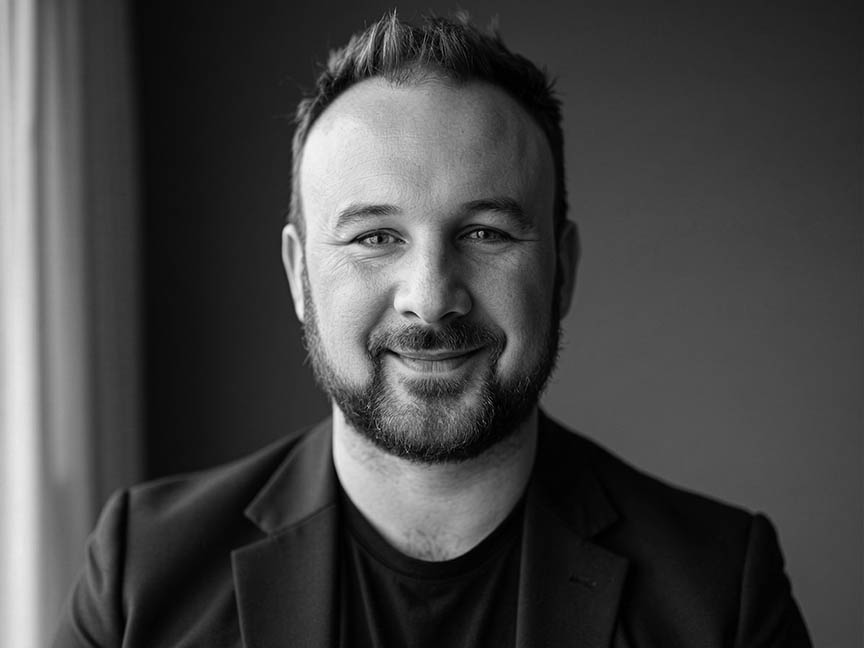
Joe Braidwood
Co-Founder & CEO
On the founding team at SwiftKey, one of the earliest natural-language-modeling companies, then head of strategy at Vektor Medical. He later built a generative-AI mental-health product and shut it down when he couldn’t show anyone the safeguards he had built. At Glacis, he leads the company that currently stewards OVERT v1.1, the open record format published at overt.is. His background spans language-model products and Cambridge law, shaping the way Glacis reasons about duty of care and defensible evidence.

Rohit Tatachar
Co-Founder & CTO
Nearly two decades at Microsoft, most recently on the Azure AI Foundry team. He joined Glacis after seeing, from the infrastructure side, how quickly consequential AI was moving into production with nothing a reviewer outside the company could verify. At Glacis he leads the technical work on supervision and operational evidence across cloud and model providers.
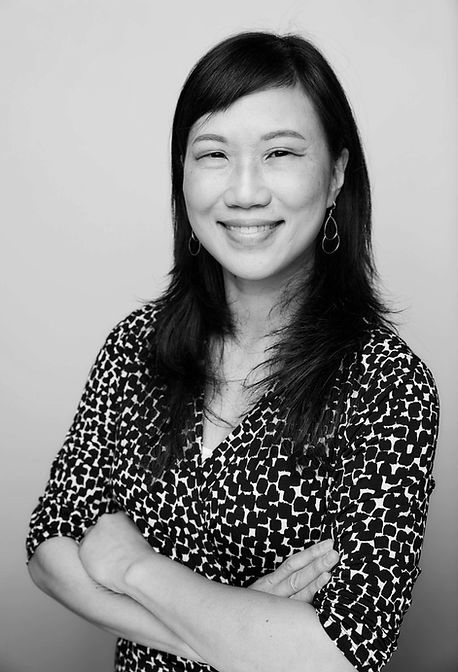
Jennifer Shannon, MD
Co-Founder & Chief Medical Officer
A physician and child psychiatrist with more than twenty years in clinical practice, who still sees patients part-time to keep herself real. She trained in psychiatry at the University of Washington, completed her child psychiatry residency and fellowship at Seattle Children’s, and remains courtesy teaching faculty at the UW School of Medicine. She served as a medical director at Cognoa, where the team earned FDA De Novo authorization for Canvas Dx, an AI-based autism diagnostic. She brings clinical-practice and regulated-AI experience to questions of human review, ownership and operational evidence. She knows what a governance committee asks, and where the clinical evidence bar sits, because she has stood on the other side of it.
What we will not trade away.
A record you can check
When an AI system touches patient care, the people who sign off on it need more than a vendor’s word. Glacis leaves a signed record their reviewers can verify for themselves.
No overclaims
Checking a signed record shows it is intact, which key signed it and what it links to, and the decision it recorded. It doesn’t tell you whether a note was clinically correct, whether every action was captured, or whether the system is safe or compliant, and it can’t confirm that events happened the way the record says.
The standard is open
OVERT, the record format, is published and open, so implementers and reviewers can inspect a record without depending on a proprietary schema.
Data minimizing by design
Controls and classifiers can run inside your environment, and protected fields can be left out of the record that travels. What stays local depends on how each deployment is set up.
The standard
Built to travel.
We wrote and published OVERT so operational evidence can be inspected and exchanged in an open format. Anyone can read it, implement it, or check a record against it without asking us for permission.
Backers.
These are the funds and programs behind the company.







Careers
Join us.
We’re building runtime guardrails for AI that leave a record anyone can check.
The work is specific. Put supervision in the path of a system that’s about to act, then leave a record that holds up when somebody outside the company reads it. That’s a systems problem, a clinical problem and a question of duty of care at the same time, which is why the founding team is shaped the way it is.
If you’ve ever been the person who couldn’t show their work, you already understand what we’re building. The careers page has the current roles, and an open application for the one that isn’t listed yet.